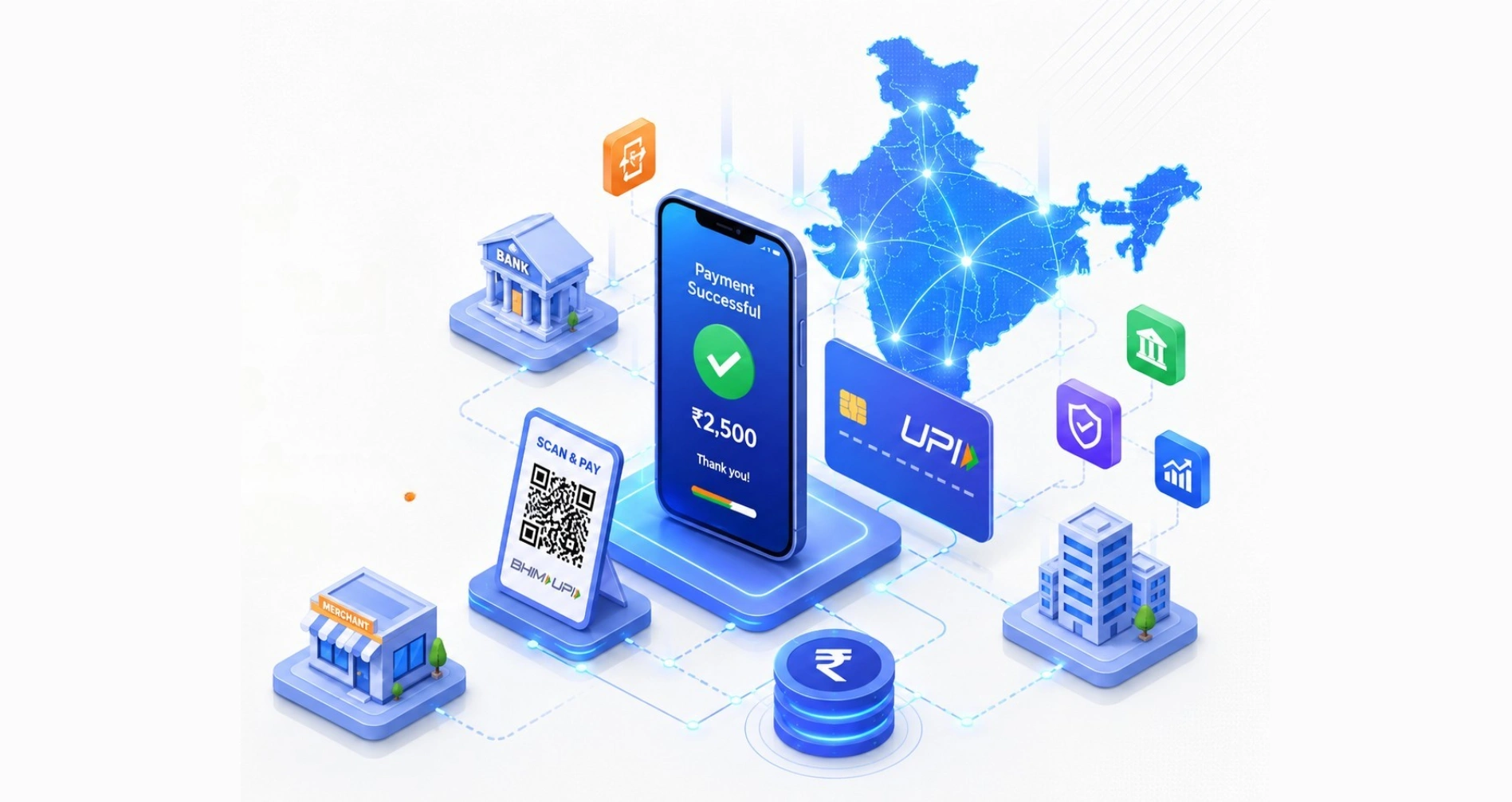
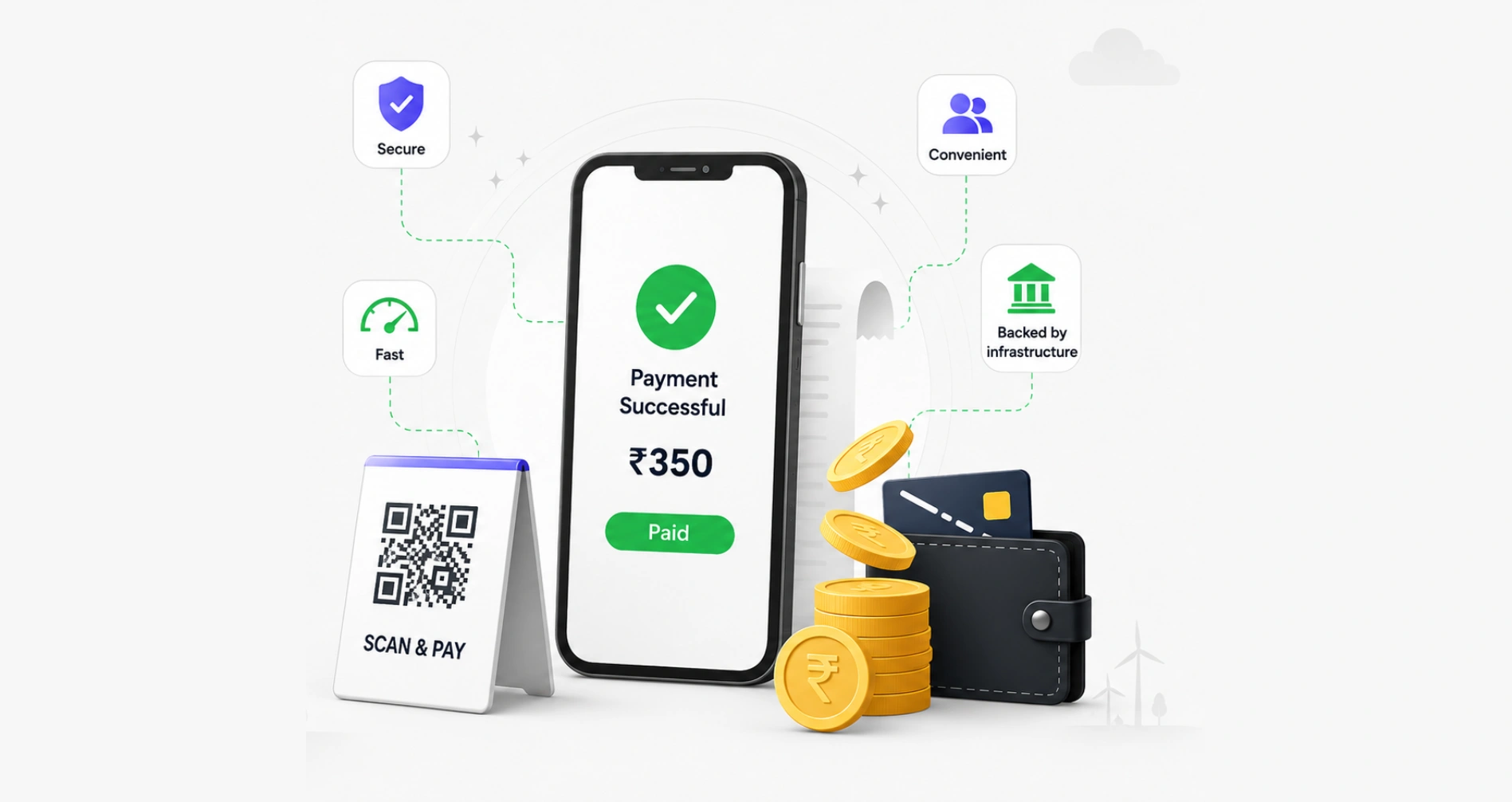
For millions of merchants across India, these phrases have become a familiar part of conversations around digital payments.
On the surface, the economics can look difficult to understand.
How can an industry that processes billions of transactions every month continue to build large-scale systems while charging little or nothing for basic payment acceptance?
The answer is not only in pricing.
It lies in the way payment infrastructure in India has developed. A large part of India’s fintech ecosystem is building the digital rails that support everyday commerce. Much of this work happens in a low-margin environment, especially around UPI payments and QR-based merchant acceptance.
In May 2026, UPI processed 23,201.93 million transactions worth ₹29,90,424.21 crore, according to NPCI’s UPI Product Statistics. NPCI also reported 720 banks live on UPI during the same month.
At this scale, digital payments infrastructure in India is no longer just a fintech story. It is part of how merchants, customers, banks, and businesses operate every day.
Key Takeaways
India’s zero-MDR payment economy has helped accelerate digital payment adoption among merchants.
Payment providers often work with thin margins while continuing to invest in infrastructure, reliability, hardware, dashboards, and support.
A simple UPI payment depends on multiple systems, including banks, processors, UPI rails, fraud checks, settlement systems, and merchant interfaces.
In 2026, reliability is becoming a stronger differentiator than only pricing.
For merchants, payment infrastructure directly affects cash flow, customer trust, settlement visibility, and daily business operations.
The Rise of India’s Digital Payments Infrastructure
Over the past decade, India has seen one of the largest shifts in digital payment behaviour anywhere in the world.
Digital payments have moved from being an urban convenience to becoming part of daily commerce across the country. From kirana stores and restaurants to service providers and online businesses, merchants now depend on digital transactions every day.
UPI has been one of the strongest drivers of this shift.
In FY 2025-26, UPI processed 24,161.69 crore transactions worth around ₹314 lakh crore. The daily average stood at around 66 crore transactions, according to the Government of India’s 2026 UPI update.
This growth has not happened because of one company or one product.
It has been made possible through multiple layers working together:
For customers and merchants, the experience feels simple.
Scan → Pay → Confirm
Behind that simple flow is a large and constantly running payment infrastructure.
Why Payments Often Appear “Free”
Payments often look free from the merchant’s side because visible pricing is only one part of the larger payment economy.
Since January 2020, MDR was made zero for RuPay Debit Cards and BHIM-UPI transactions through changes in the Payments and Settlement Systems Act, 2007 and the Income-tax Act, 1961. The Government has also used incentive schemes to support low-value BHIM-UPI transactions and promote digital payments.
This helped UPI and QR payment adoption grow faster among merchants.
For a small business, “zero MDR” or “free QR” reduces friction. The merchant does not need to think too much before accepting UPI payments. The customer also gets a familiar and fast payment experience.
But free at the front does not mean cost-free at the back.
Payment providers still need to invest in:
Technology infrastructure
Bank integrations
Transaction monitoring
Fraud prevention
Settlement systems
Merchant onboarding
Device management
Customer support
Dispute handling
Dashboards and reporting tools
This is why the economics of digital payments in India are not as simple as “free service equals no cost.”
The cost still exists. It is absorbed, distributed, subsidised, or recovered through broader business models, scale, partnerships, hardware, service layers, and value-added tools.
The Infrastructure Behind Every UPI Payment
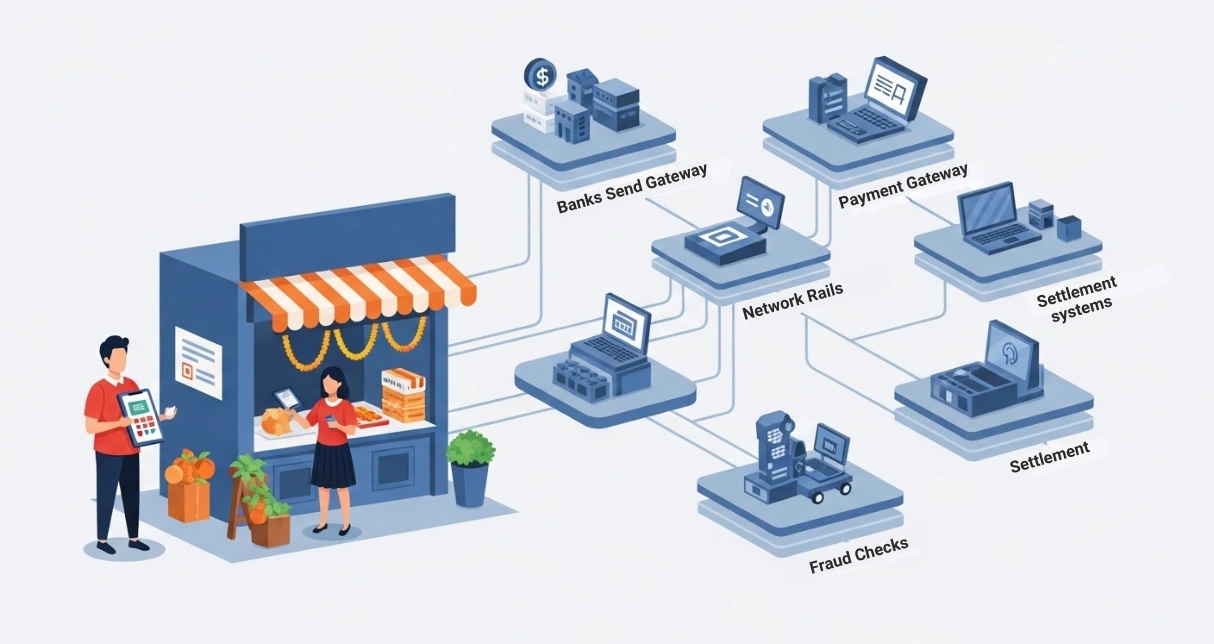
Every UPI payment travels through multiple systems before it is completed.
A typical merchant payment may involve:
The customer’s UPI app
The merchant QR code or payment interface
A payment gateway or payment processor
The customer’s bank
The merchant’s acquiring bank or partner
NPCI’s UPI rails
Fraud and risk checks
Transaction status systems
Settlement systems
Merchant reporting tools
For the customer, this happens in seconds.
For the merchant, the important question is simple: did the payment succeed, and will the money settle correctly?
That is why payment infrastructure for merchants must do more than process transactions.
It must help merchants know:
Whether the payment was successful
When the settlement will happen
Which payment mode was used
Whether a refund or dispute is pending
How many payments came through QR, POS, or online payment channels
Whether the day’s collections match business records
This is where payment systems become operational infrastructure.
A QR code, POS machine, payment gateway, or UPI soundbox may look like a payment tool. But for a merchant, it becomes part of daily business discipline.
Why Reliability Matters More in 2026
In the early phase of digital payment adoption, affordability was the main focus.
The goal was simple: make digital payments easy to accept.
In 2026, the conversation is maturing.
Merchants are still price-conscious, but they are also asking more practical questions:
Will the payment work during peak hours?
Will the soundbox confirm the transaction instantly?
Will settlements arrive predictably?
Will the dashboard show clean transaction records?
Will failed payments and disputes be handled quickly?
Will the system remain stable during high-volume periods?
This matters because India’s payment volumes are now very large.
The Government of India’s 2026 UPI update states that UPI accounts for around 85% of India’s digital payment transaction volume in FY 2025-26.
When one payment system carries this much volume, reliability becomes central to trust.
During festivals, online sales, sporting events, concerts, and month-end business cycles, payment volumes can rise quickly. Even a small drop in success rates can affect merchant revenue, customer experience, and cash flow.
For merchants processing hundreds or thousands of payments every day, payment reliability is not a technical detail.
It is a business requirement.
The Role of Fintech in India’s Digital Economy
Fintech companies play an important role in building and maintaining India’s payment infrastructure.
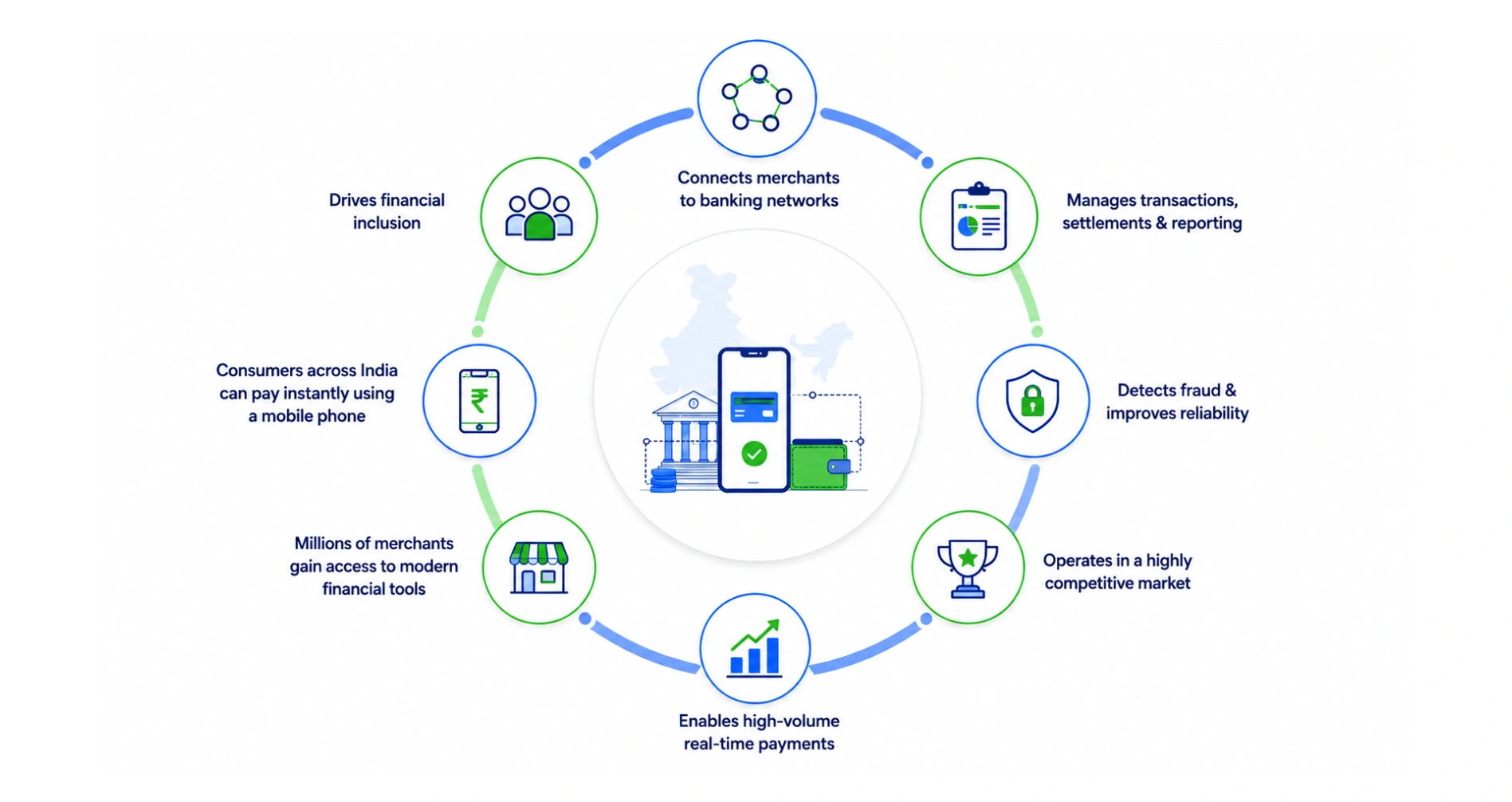
They connect merchants to banking systems. They build payment gateways for online payment collection. They provide QR payment solutions for stores. They offer POS systems for card and UPI acceptance. They support UPI soundbox alerts, merchant dashboards, settlement visibility, and transaction reporting.
This role has become more important because digital payments are no longer limited to large brands or ecommerce platforms.
Digital transactions have reached small merchants, local service businesses, retail shops, food vendors, delivery-led businesses, and neighbourhood stores.
A 2026 Government report on digital payments noted that digital transactions increased nearly 11 times between 2021 and 2025, while UPI’s share in total digital transactions rose to around 80% during the same period.
This shows how deeply payment behaviour has changed.
The real challenge now is not only bringing more merchants into digital payments.
The larger challenge is helping them operate better once they start accepting digital payments.
That means reliable acceptance, clear records, faster confirmation, settlement tracking, reconciliation support, and responsive service.
Supporting the Merchants Who Power the Economy
At the centre of India’s digital payments growth are merchants.
Small retailers, restaurants, service providers, food stalls, clinics, salons, local stores, ecommerce sellers, and many other businesses depend on daily payment collections to keep running.
For these merchants, payment infrastructure affects:
Daily cash flow
Inventory planning
Supplier payments
Staff payments
Customer experience
Business records
Settlement tracking
Trust in digital payments
This is why payment infrastructure for merchants has to be reliable, simple, and visible.
A merchant does not want a complicated system. They want to know that the payment has come, the record is visible, and the settlement will happen as expected.
That is the real test of payment infrastructure in India.
Not only whether it can process large volumes, but whether it can support daily business calmly and consistently.
Beyond Free Payments: The Real Story
India’s digital payments growth is often described through convenience.
Fast payments. Easy QR scans. Instant confirmation. Online payment collection. Digital receipts.
All of this is true.
But the deeper story is infrastructure.
Behind every successful UPI payment is a system that has to keep working across banks, apps, merchants, devices, processors, and settlement layers.
Behind every free QR code is a network that still has to be maintained.
Behind every zero-MDR transaction is infrastructure that still carries a cost.
This is the hidden story of fintech’s zero-margin economy.
It is not only about making payments free.
It is about building the rails that allow India’s digital economy to keep moving.
Conclusion
India’s digital payments revolution is not only a story of speed and convenience.
It is a story of payment infrastructure.
In 2026, UPI payments, QR payment systems, POS machines, payment gateways, UPI soundbox alerts, settlement systems, and merchant dashboards are becoming part of daily commerce.
Much of this infrastructure operates in a low-margin environment. Yet it continues to support one of the world’s largest real-time payment ecosystems.
For fintech companies, the future will not be decided only by who offers the lowest price.
It will be decided by who builds reliable systems for merchants.
Because for a merchant, a payment is not just a transaction.
Fintech • July 02, 2026 by FiatPe Every month, the National Payments Corporation of India (NPCI) publishes detailed statistics on Unified Payments Interface (UPI). Most reports focus on the visible numbers: total UPI transaction volume, total transaction value, and month-on-month growth. But in 2026, NPCI UPI data tells a deeper story. It shows how digital […]
Fintech • Payment Infrastructure by FiatPe • July 18, 2026 “No setup cost.” “Low-cost payment acceptance.” For millions of merchants across India, these phrases have become a familiar part of conversations around digital payments. On the surface, the economics can look difficult to understand. How can an industry that processes billions of transactions every month […]
Fintech • Unified Payments by FiatPe • July 18, 2026 Digital payments in 2026 are no longer a differentiator. They are infrastructure. Customers expect payments to be fast, simple and reliable. For kirana stores, cafés, retailers and growing MSMEs, the challenge is not accepting payments. The real challenge is managing multiple systems while doing business. […]
Fintech • 5 MINS READ by FiatPe • August 14, 2026 Everyone says, “Go digital to grow.” But what does that actually mean for your shop? It does not mean complicated systems. It does not mean technical knowledge. It simply means making it easier for customers to pay you. Let us break it down in […]


 Back